Maintenance
An Annual Maintenance Calendar for Built-In Appliances
Month by month, by appliance type, tuned to Northeast Florida pollen, humidity and storm season. What genuinely extends appliance life and what does nothing.
Anyone can do this
No tools, no disassembly, and nothing that can void a warranty.
Covers these symptoms
- how often should I clean the condenser
- when do I change the water filter
- appliance maintenance schedule
- dishwasher smells
- dryer takes two cycles to dry
What you need
- A vacuum with a brush and a crevice tool
- A soft condenser or refrigerator coil brush
- An appliance thermometer
- Replacement water filters for each water-fed appliance
- The descaling agent each manufacturer specifies
Most of the emergency calls we run were avoidable, and the avoidable ones share a small number of causes: a condenser nobody has ever cleaned, a water filter that has been in for four years, a dryer vent full of lint, a gasket that stopped sealing two summers ago, and a boiler full of Floridan aquifer limestone.
What follows is a calendar rather than a checklist, because the point is to spread thirty minutes a month across the year instead of losing a Saturday and then never doing it again. It is tuned to this region: our pollen season, our storm season and our humidity.
January — recover from the holidays
The dishwasher and the ovens have just had their hardest four weeks of the year.
- Pull and clean the dishwasher filter. On most modern luxury dishwashers this is a cylindrical or flat filter in the sump that twists out. Grease and starch from holiday loads is exactly what blocks it.
- Pull the spray arms and hold them to the light. Scale and debris narrow the jets from the inside, which degrades washing so gradually that people blame the detergent.
- Wipe out the oven cavity properly. Cold, with a damp cloth and a plastic scraper. Baked-on sugar left in a cavity carbonizes further every time the oven runs.
- Check refrigerator and freezer gaskets after weeks of doors being opened constantly by guests.
February — pollen season starts
Oak and pine pollen arrives in Northeast Florida well before spring elsewhere, and the condenser fan on every refrigeration appliance in your house is a very effective pollen collector.
- Clean the condenser on the refrigerator, the freezer, the wine cooler, every undercounter unit and the ice machine. Location varies by platform: on some it is behind a flip-up grille at the top, on many undercounter and column products it is behind the toe grille at the bottom. Vacuum with a brush attachment, then use a coil brush on the fins. Never bend the fins flat.
- Clean or replace the range hood filters. Baffles go in the dishwasher; mesh filters usually do too, if the manufacturer permits it.
March — water month
- Change every water filter in the house on the same day, so you only have to remember one date: refrigerator, ice machine, coffee system, and any inline or whole-home cartridge. Run several quarts through afterward to flush carbon fines.
- Descale the steam oven and the built-in coffee system, using the agent the manufacturer specifies.
- Run the dishwasher’s cleaning cycle with the product the manufacturer recommends.
One regional note belongs here and nowhere else on this site. Our tap water is drawn from the Floridan aquifer through limestone, so it carries a real dissolved mineral load, and everything in the kitchen that boils or meters water leaves some of that behind. Run the descale cycle the first time an appliance asks rather than the fifth, and set the water value in each machine’s menu when it is installed — that value is what the descale counter is calculated from, and it is almost always still on the factory default.
April — laundry and venting
- Clear the entire dryer vent run, not just the lint screen. Disconnect at the machine, brush the duct, and confirm the exterior flap opens when the dryer runs. Long or crushed flexible ducts in interior laundry rooms are the usual culprit.
- Clean the washer door seal and the detergent dispenser. Front-loaders in Florida humidity grow biofilm in the gasket fold; wipe it dry and leave the door ajar between uses.
- Check the washer hoses and the shutoff valves.
May — get ready before the season does
Hurricane season starts 1 June, and we average roughly 68 thunderstorm days a year. Storm-damaged control boards are one of the most common failures we see.
- Put surge protection on the appliances that have boards and confirm any existing whole-home surge device is still showing a healthy indicator. Boards do not care whether the surge came from a strike or from the grid restoring after one.
- Photograph every data plate and store the photos. When something fails during an outage week, the model and serial in your phone is what gets a part moving.
- Locate and test the water shutoffs for the refrigerator, the ice machine and the dishwasher.
- Verify freezer temperature with a real thermometer. A full freezer holds food far longer in an outage than a half-empty one.
June — outdoor kitchens and salt air
- Deep clean the outdoor kitchen: grill burners and venturis, the outdoor refrigerator or ice machine condenser, and drain lines.
- Rinse stainless with fresh water if you are in the coastal ZIP codes — 32082, 32250, 32266, 32233 and 32084. Chloride-laden marine air works on condenser fins, hinge hardware and fasteners continuously, and a freshwater rinse plus a wipe-down is genuinely the only thing that slows it.
July — peak heat
- Verify actual temperatures in the refrigerator, the freezer and the wine cooler with a thermometer rather than trusting the display.
- Clean the range hood filters again. Grease load is highest in summer when the kitchen runs hot and ventilation runs constantly.
- Check clearance at every grille. Anything stacked against a kickplate or a rear vent turns a hot month into an overworked compressor.
August — mid-year refrigeration check
- Second condenser cleaning of the year if you have pets, a busy household, or a unit in a garage or outdoor location.
- Check drain lines and drip trays. Interior water at the bottom of a refrigerator or freezer compartment usually means a frozen or blocked drain, not a leak.
- Look behind the ice machine for weeping at the fill valve.
September — the storm month
Statistically our most active month. Keep it simple:
- Keep the freezer full. Frozen mass is the cheapest outage insurance there is.
- Confirm your surge protection is intact after summer storms.
- Check gaskets before entertaining season starts.
October — before the ovens get busy
- Verify oven temperature with an oven thermometer at 350°F, center rack, after a full preheat plus ten minutes. Most calibration complaints are real and most are adjustable in the settings menu.
- Deep clean the hood baffles and the blower housing.
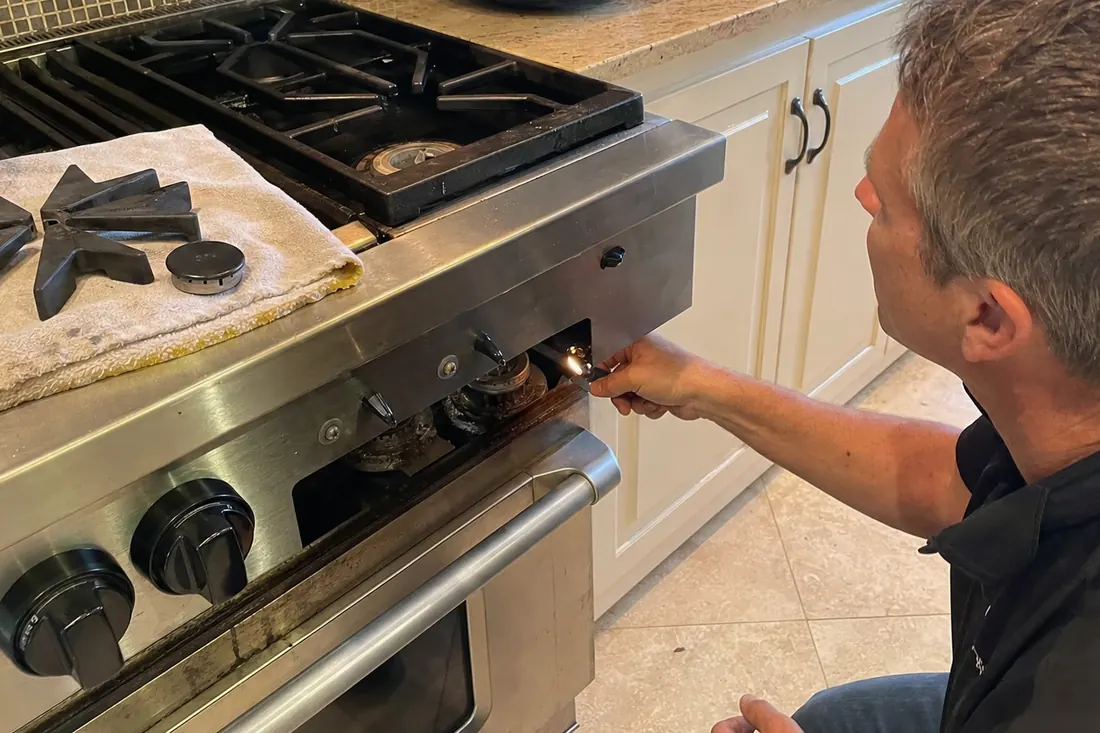
- Clean the burners, caps and igniter ports on a gas cooktop or rangetop; check that every burner lights promptly without clicking repeatedly.
- If you intend to run a self-clean cycle, run it now — weeks before you need the oven, not days.
November — before Thanksgiving
- Do not run self-clean this month. This is the single most reliable way to arrive at Thanksgiving with a locked, dead oven.
- Test everything you are about to depend on: the oven, the warming drawer, the dishwasher, the ice machine.
- Empty and restart the ice machine so you begin the season with fresh ice, and check the bin level arm and the fill tube.
December — capacity month
- Watch the load, not the appliance. Overpacked refrigerators block internal air ducts and produce warm spots that look like failures.
- Clean the condenser again if you have pets. Hair plus a full house is the worst combination there is.
- Check the wine cooler before it is holding anything you care about.
Twice a year, whenever it suits you
Door gaskets on every refrigeration appliance. Leveling on dishwashers and refrigerators. A look at the dishwasher’s under-tub area for early leak evidence. A quick listen to every appliance while it runs — new noises precede failures by months.
What genuinely does not help
Bleach or household vinegar poured through appliances that were not designed for them. Aerosol coil cleaners that leave a tacky residue on fins where dust then sticks permanently. Deodorizing sachets that mask a blocked drain rather than clearing it. Replacing filters at half the specified interval. Running self-clean repeatedly as routine maintenance. None of these buys you anything, and two of them cost you parts.
If something on this list turns up a problem you would rather not chase yourself, call +1 (904) 977-8701. We are an independent appliance repair company in Fruit Cove covering St. Johns, Duval and Clay counties, with a flat $129 diagnostic credited toward the repair when you approve the work.
Step by step
- 01
Clean the condenser every 6 to 12 months
This is the single highest-value maintenance task on any refrigeration appliance, including wine storage, undercounter units and ice machines. A blocked condenser makes the compressor run longer and hotter than it was designed to, which is how a unit that should reach 25 years reaches 14. Do it more often in homes with pets.
- 02
Change every water filter on schedule
Refrigerator, ice machine, coffee system and any inline or whole-home filter. A spent filter restricts flow, and low flow at a fill valve is the most common cause of small or hollow ice cubes. Carbon filters do not soften water, so they do not stop scale.
- 03
Descale everything that boils water, on the first prompt
Steam ovens and built-in coffee systems evaporate your tap water and leave every dissolved mineral behind in the boiler. Run the manufacturer's descale cycle the first time it is requested, using the agent that manufacturer specifies.
Do not substitute household vinegar in a sealed boiler unless the manufacturer explicitly permits it. Acetic acid attacks seals and some aluminum components.
- 04
Clear the full dryer vent run once a year
Not the lint screen — the whole duct from the machine to the exterior hood. Restricted venting is both the most common cause of long dry times and a genuine fire risk. Check that the exterior flap actually opens when the dryer runs.
- 05
Check door gaskets twice a year
Wipe them clean, look for tears and flat spots, and test the seal by closing the door on a sheet of paper. If the paper slides out with no drag, that section is not sealing. A leaking refrigerator gasket in Jacksonville humidity produces condensation, frost and a compressor that never stops.
Questions this raises
What single maintenance task matters most?
Condenser cleaning on every refrigeration appliance in the house. It costs nothing, takes fifteen minutes, and it is the difference between a compressor working within its design envelope and one running hot for years. Every other item on this calendar is worth doing; this one changes the lifespan of the appliance.
How often should I really change the refrigerator water filter?
Follow the manufacturer's interval, which is commonly every six to twelve months, and change it sooner if dispenser flow drops or ice cubes come out small or hollow. Those two symptoms are the cartridge telling you it is spent, and they arrive before the taste does.
Does pollen season actually affect appliances here?
Yes, and it is a real local factor rather than a talking point. Oak and pine pollen in late winter and spring is drawn straight into condenser coils by the cooling fan, where it mats with dust. February through April is the right window to clean refrigeration condensers in Northeast Florida.
Should I run the oven self-clean cycle before a holiday?
No. Pyrolytic self-clean cycles push the cavity to extreme temperatures and are a known stress on thermal fuses, door lock mechanisms and control boards. If you are going to run one, run it several weeks before you need the oven, not the week of, so a failure does not land on Thanksgiving morning.
What maintenance is a waste of time?
Running vinegar or bleach through appliances that were not designed for it, aerosol coil sprays that leave a residue dust then sticks to, deodorizing tricks that mask a drain problem instead of clearing it, and changing filters far more often than specified. None of these extends appliance life and some of them shorten it.
If you would rather not